LogicGate’s Cyber Risk Management Agents are built-in AI agents that triage incoming cyber risks, draft first-pass risk assessments, and answer questions about your risk data. Security experts still review, refine, and approve every output. The agents are part of LogicGate’s Cyber Risk Management Agentic Application.
The cyber threat landscape moves faster than manual operations can manage. Security teams are increasingly trapped in reactive data-gathering, spending more time hunting for threat context and sorting through messy intake forms than mitigating vulnerabilities. To keep pace, governance, risk, and compliance (GRC) must be more than simply interconnected. It needs to be agentic.
To meet that need, we are thrilled to announce LogicGate’s release of the Cyber Risk Management Agentic Application. By embedding AI directly into your risk workflows, the application automates first-pass assessments and accelerates remediation, freeing your experts’ capacity for more strategic defense.
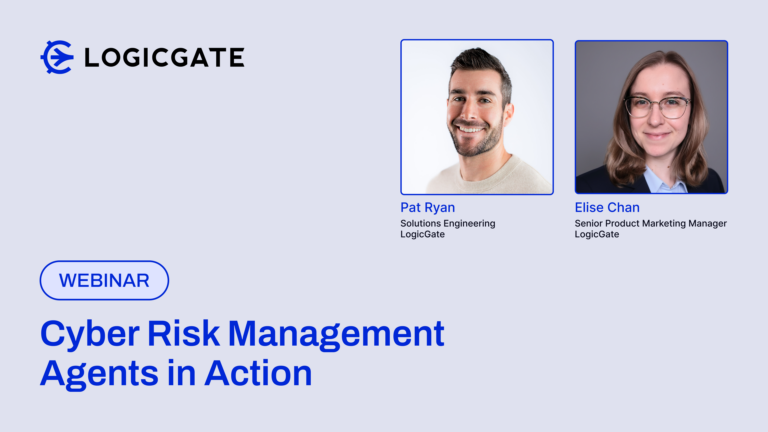
What Did the Cyber Risk Management Agents Webinar Cover?
To demonstrate how teams can transition from a manual, point-in-time approach to a continuous, AI-driven operating model, LogicGate recently hosted a live, focused webinar.
Elise Chan, Product Marketing Manager at LogicGate, and Pat, Ryan, Solution Engineer at LogicGate led the session. They unpacked the impact of GRC agents and demonstrated the application in a live environment.
Inside the Demo: Delegating Manual Data Synthesis
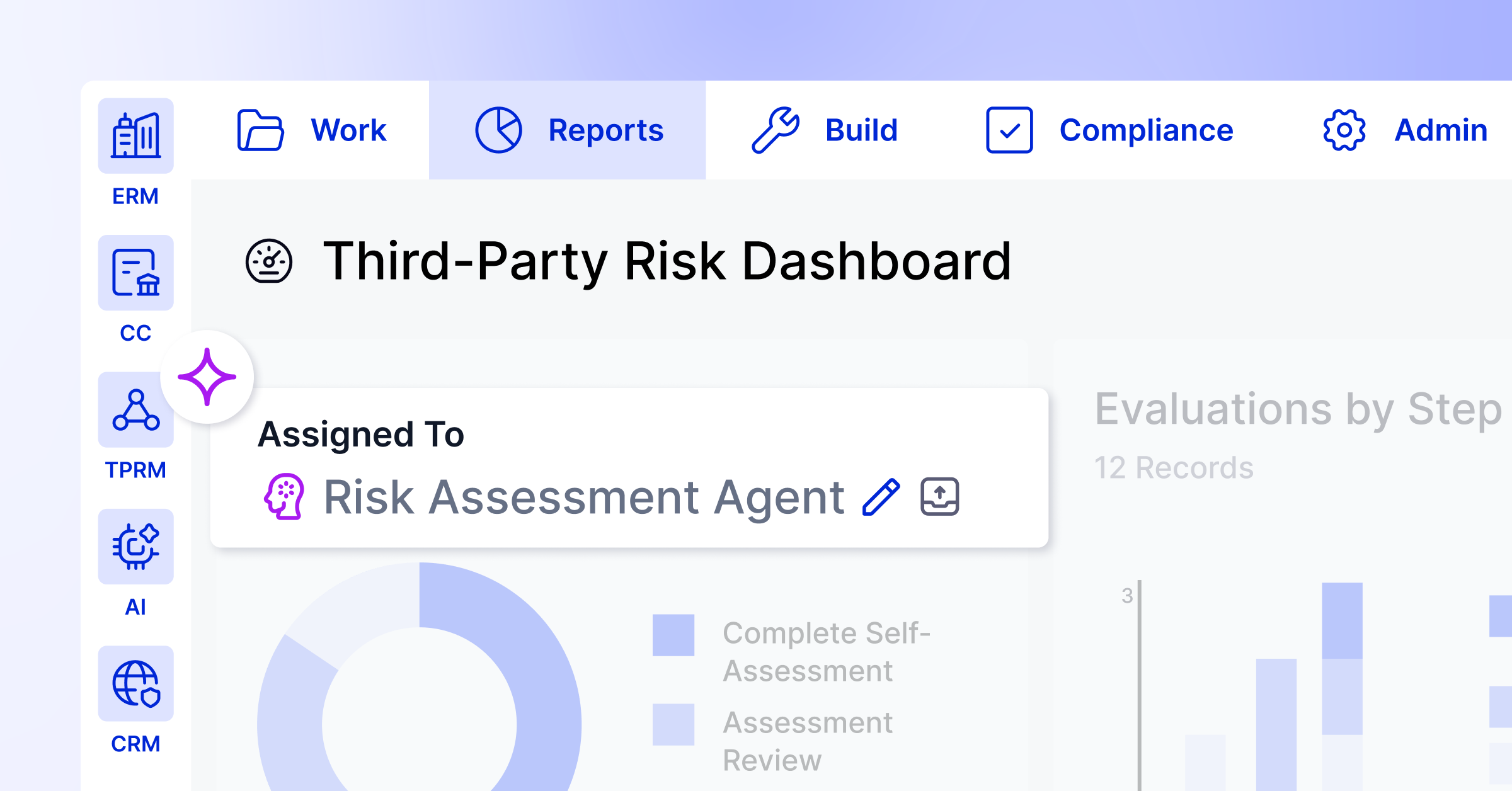
In the live demo, Pat walked attendees through how the agents operate. Quality AI outputs depend on a continuous feed of data from your existing tech stack.
The built-in agents do not replace security professionals. They handle the heavy data crunching so your team can review, refine, and approve auditable, AI-generated assessments.
What Does the Cyber Risk Triage Agent Do?
Intake is often a bottleneck of misclassified data. The Cyber Risk Triage Agent serves as an automated frontline defense, separating true cyber risks from routine issues or policy exceptions. It evaluates incoming records against your governance definitions and routes invalid submissions back to the original submitter with clear guidance.
During the demo, Pat highlighted how this transforms the user experience:
“The agent takes a relatively unstructured set of data, just a description. The first thing it did was make a decision. It’s saying that yes, this is a true risk within the organization and should be created.”
What Does the Cyber Risk Assessment Agent Do?
Once a risk is identified, the Cyber Risk Assessment Agent completes a first-pass evaluation aligned with your organization’s specific framework. It synthesizes linked threat data, evaluates mitigating IT controls, and proposes justified risk scores with auto-filled remediation plans for human review.
As Pat noted, this keeps the human securely in the loop:
“The idea here is not to eliminate the subject matter expert from completing a risk assessment. The agent can act as an assistant that surfaces things we may not have been thinking about.”
What Does the Insights Agent Do?
To pull it all together, the Insights Agent transforms complex security data into an intuitive chat experience. It builds executive-ready reports and dynamically flags escalating technical threats that need immediate attention. Instead of manually building custom reports, users can interrogate their data directly.
“The Insights agent allows me to ask questions in plain language… and starts to generate insights and detect patterns,” Pat explained.
What Does an Agentic Approach Change for Security Teams?
The shift to an agentic GRC model is an immediate operational advantage, not a future concept. By delegating data synthesis, triage, and first-pass assessments to built-in Cyber Risk Agents, your team reclaims time for strategic judgment. You can clear the technical backlog, ensure consistent scoring across the risk register, and accelerate remediation.
Ready to see how these capabilities align with your organization’s specific risk framework? Request a custom demo today to see how the Cyber Risk Management Agentic Application can empower your team to proactively manage threats at scale.
Frequently Asked Questions About Cyber Risk Management Agents?
What Are Cyber Risk Management Agents?
Cyber Risk Management Agents are AI agents built into LogicGate’s Cyber Risk Management Agentic Application. They triage incoming risks, draft first-pass assessments, and answer questions about your risk data. Experts review and approve the results.
Do the Agents Replace Security Professionals?
No. The agents produce first-pass triage and assessments for human review and approval. Security experts keep ownership of final risk scores and remediation decisions.
How Does the Cyber Risk Assessment Agent Score a Risk?
The agent applies your organization’s framework to propose a justified risk score. It evaluates mitigating controls and drafts a remediation plan. LogicGate’s control repository maps to standards such as the NIST Cybersecurity Framework and ISO/IEC 27001.
What Happens to Invalid Risk Submissions?
The Cyber Risk Triage Agent checks each record against your governance definitions. It routes invalid submissions, like issues and exception requests, back to the original submitter with clear guidance.
What Can You Ask the Insights Agent?
You can ask questions about your cyber risk data in plain language. The Insights Agent builds executive-ready reports and flags escalating technical threats.