A GRC module is a set of risk and compliance screens added to a platform built for IT operations. By contrast, a GRC platform is built for assurance, with risk, compliance, and audit work at the center from the data model up. The difference shows up in adoption, because teams use the tools designed for them and work around the ones that weren’t.
Many organizations land on a module without really choosing one. The IT platform is already in the stack, so adding GRC looks like the efficient path. Then the risk team inherits a tool shaped around someone else’s job.
What Does “Bolted On” Actually Mean?
A bolted-on module reuses the host platform’s data model. Records, fields, and workflows were designed for tickets, assets, and incidents. Risks, controls, and audit findings get fitted into that structure afterward.
Fitting works for a while. It strains when one vendor finding has to appear in the enterprise risk register, the control library, and the next audit plan.
Why Do Risk and Compliance Teams Go Back to Spreadsheets?
When a tool doesn’t match how a team works, people route around it. For risk and compliance teams, that usually means a return to spreadsheets.
Spreadsheets are a symptom. Teams reach for them when the system of record is hard to configure, hard to read, or built for a different audience.
What Changes When a Platform Is Built for Assurance From the Start?
Two things change first: how the data connects and who configures the system.
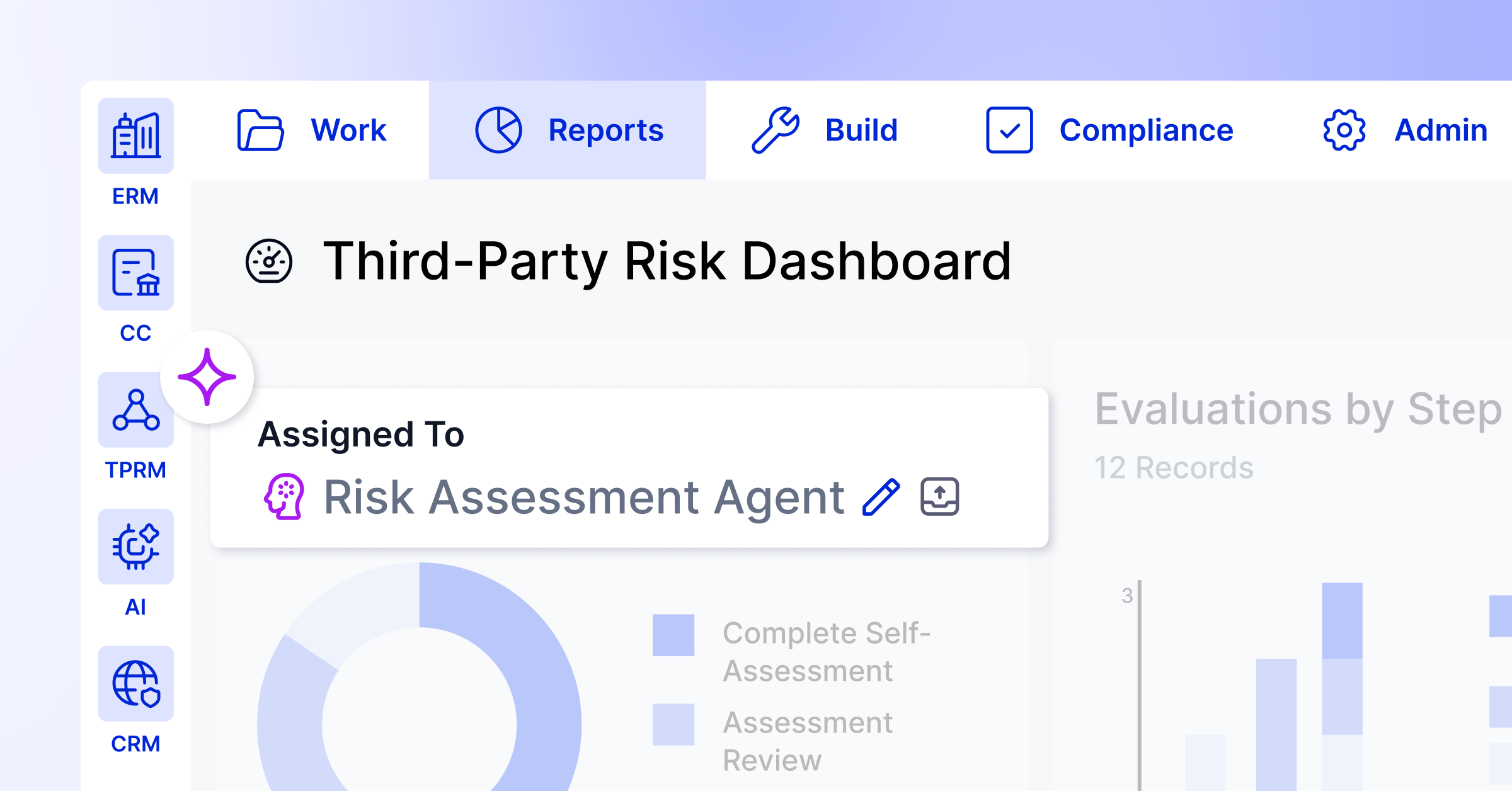
LogicGate’s Risk Cloud® runs on a no-code, flexible graph database. Enterprise risk, third-party risk, cyber, controls, audit, and compliance data live in one connected structure. A vendor finding can roll up into the enterprise risk register without anyone re-keying it.
The second change is who does the configuring. In a no-code model, risk teams build forms, intake processes, and scoring models themselves. IT still owns security reviews, access, and integrations, but it stops being the bottleneck for everyday changes.
The people in the platform every day are risk owners, compliance leads, and audit managers. The product is designed around their work, not around a ticket queue. IDC’s 2026 third-party risk management vendor assessment credits LogicGate’s no-code approach with reducing professional services dependency.
How Does a GRC Module Compare With a GRC Platform?
Gartner evaluates GRC tools as their own software category in its Magic Quadrant for Governance, Risk and Compliance Tools. The table below compares the two approaches on the factors that most affect a risk program.
| Factor | GRC Module on an IT Platform | Platform Built for Assurance |
| Data model | Reuses records designed for tickets, assets, and incidents | Risk, control, and audit records connected from the start |
| Who configures | Often IT or a services partner | Risk teams, in a no-code environment |
| Cross-domain rollups | Findings are often re-keyed or mapped between modules | A vendor finding can roll up into the enterprise risk register |
| Primary users | IT operations staff first, risk teams second | Risk owners, compliance leads, and audit managers |
| Leadership reporting | Often assembled from exports and spreadsheets | Drawn from live program data |
What Does a Connected Risk Record Look Like in Practice?
Take a vendor that fails a security assessment. In a connected structure, that finding links to the vendor record and rolls up into the enterprise risk register. Risk and audit teams then work from the same record.
In a bolted-on module, each team often keeps its own copy of the finding. Someone re-keys it, and the copies drift apart as each team updates its own.
When Is a GRC Module Enough?
A module can be enough for a narrow program. That usually means one risk domain, light reporting needs, and strong IT administration support.
Reassess when a second domain joins the program or leadership asks for cross-domain reporting. At that point, the data model sets the limit, not the feature list.
What Should Buyers Ask Before Choosing a GRC Platform?
Four questions separate a platform built for assurance from a module added to something else.
- When a regulation or framework changes, are the new requirements mapped to your existing controls for you?
- Can it express risk in financial terms, or only in severity ratings?
- Does it come with applications built for risk and compliance programs, or only a general workflow tool?
- Does leadership reporting draw from live program data or from spreadsheets assembled by hand?
Run those four questions against every platform on your shortlist, including ours. For a fuller evaluation framework, see how to choose a GRC platform in 2026.
See how Risk Cloud connects enterprise risk, third-party risk, cyber, controls, audit, and compliance on one platform.
Frequently Asked Questions
What is the difference between a GRC module and a GRC platform?
A GRC module adds risk and compliance features to a host platform built for another purpose. A GRC platform is built for assurance, with risk, compliance, and audit data and workflows at its core from the start.
Can a GRC module work for a small program?
Sometimes. A single-domain program with light reporting needs and strong IT admin support can fit a module. Gaps appear when risk, control, and audit data have to connect across teams.
Why does adoption matter more than feature count?
A feature nobody uses produces no data. When teams work in spreadsheets, the system of record is incomplete and leadership reporting rolls up stale information.
Does a purpose-built GRC platform still need IT?
Less often. With a no-code model, risk teams configure forms, workflows, and scoring themselves. IT still owns integrations, access, and security reviews.
Why do teams outgrow a GRC module?
Teams outgrow a module when risk, compliance, and audit data have to connect across domains. The host platform’s data model was built for other records, so each new connection needs extra configuration. Reporting then depends on spreadsheets assembled by hand.
What should you evaluate when comparing a GRC module and a GRC platform?
Start with the data model, then check who configures changes and how leadership reporting is produced. The four buyer questions above turn those checks into a shortlist test.
How does LogicGate connect risk, compliance, and audit data?
LogicGate’s graph database holds enterprise risk, third-party risk, cyber, controls, audit, and compliance data in one connected structure. A vendor finding can roll up into the enterprise risk register without re-keying.